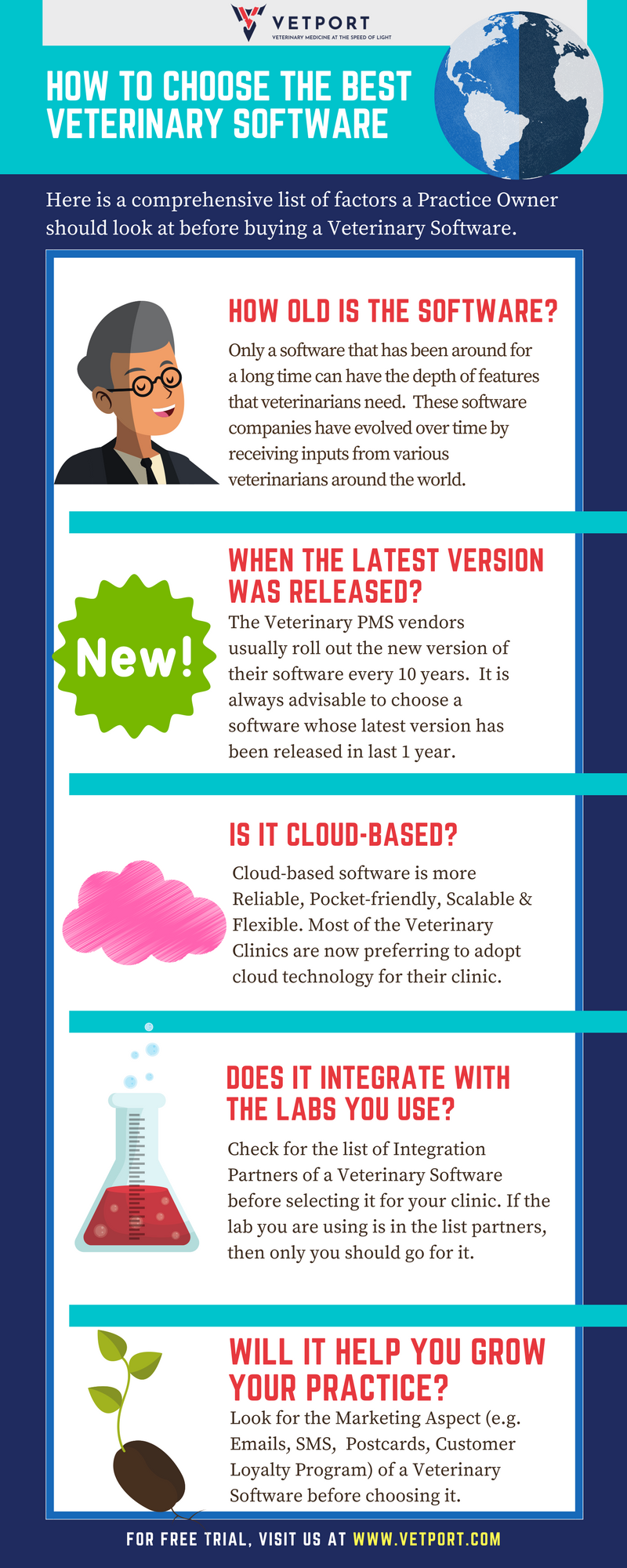
How to choose the best veterinary software
Choosing veterinary software comes down to fit rather than features. Check that it matches how your practice actually works, that it integrates with your labs and payment provider, that you can export your own data, that support is reachable during consulting hours, and that the system has been meaningfully updated in the last year.
Start with your own workflow
Before looking at any vendor, write down the three tasks your team repeats most often. For most practices that is checking a client in, writing the consult note, and taking payment. Those three decide what the working day feels like. A system that handles them in four clicks beats one with twice the features and six clicks, every single time.
Integrations you cannot do without
List your laboratory providers, your payment terminal, your imaging equipment and anything else that currently produces a result someone retypes. Any of those without an integration becomes a daily tax on the team and a source of errors in the record. This list usually removes half the market before you have watched a demonstration.
Who owns the data
You should, and it should be in writing. Ask for the export format, how long a full export takes, and whether it includes attachments and images rather than only the database tables. A vendor who cannot answer that plainly has answered it anyway, and the answer matters most on the day you decide to leave.
Support you can actually reach
A problem with the practice system happens during consulting hours, with a waiting room full of people. Ask what hours support covers in your time zone, how you contact them, and what a realistic response time looks like. Then ask an existing customer in your country rather than taking the brochure's word for it.
How recently it was updated
Check the release notes rather than the marketing page. A system whose last meaningful release was several years ago is telling you where it sits on the vendor's priorities. Ask what shipped in the last twelve months and what is committed for the next twelve.
The real cost
Headline price is the least useful number. Ask for the total first year cost including data migration, training and integrations, then the annual cost after that, then what happens when you add a vet or a second site. Migration in particular is where a cheap quote turns into an expensive year.
Shortlist three, no more
Three vendors is enough. Beyond that the demonstrations blur and the decision drifts for months while the practice keeps paying for the system it wanted to replace. Score them against the workflow list you wrote at the start, involve the people who will use it daily, and decide.
Involve the people who will use it
The owner signs the contract, but the receptionist and the nurses live in the system all day. A shortlist chosen without them is how practices end up with software that looks impressive in a boardroom and adds two clicks to every check-in. Put them in the demonstrations, give them the same scoring sheet, and take their objections seriously, because they are describing next year's daily friction.
Plan the switch before you sign
Agree the migration plan as part of the purchase rather than afterwards: what data moves, who cleans it, when the parallel period runs, and what the fallback is if something is wrong on day one. Agree the training dates too. Practices that leave both to be arranged later are the ones whose go-live slips by a month and whose team learns the system while consulting.
A short checklist to take into the demonstrations
Print this and score each vendor out of five. Does the veterinary software match your three most repeated workflows. Does it integrate with your labs, imaging and payment provider. Can you export your own data on demand, including attachments. Is support reachable during your consulting hours. Has it shipped meaningful updates in the last year. Is the total first year cost, including migration and training, written down.
Six questions, three vendors, one afternoon. A practice that answers all six honestly usually finds the decision makes itself, and the one that scores worst on support is rarely the right choice however good the demonstration looked.

