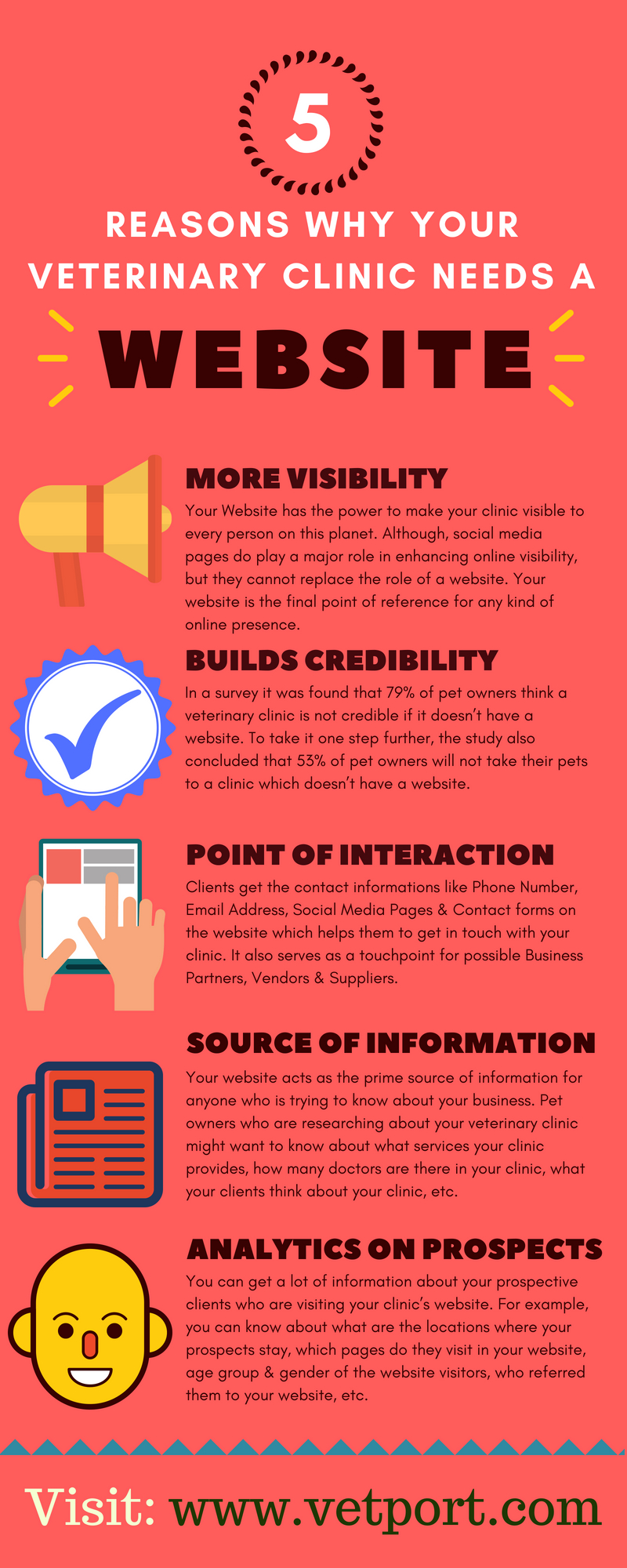
5 Reasons why your veterinary clinic needs a website
A veterinary clinic needs a website because it is the only place online you control. It makes the practice findable in local search, answers the routine questions that otherwise reach reception by phone, lets clients book at any hour, holds your credentials in public view, and keeps working when a social platform changes its rules.
Why a social media page is not enough
A practice page on a social platform is useful for talking to the clients you already have. It is a poor substitute for a website, because you do not own it. The reach is decided by an algorithm, the layout is decided by the platform, and the whole thing can be suspended or restricted without warning. A website is the one place online where the practice controls what is said and how it is found.
1. It makes the clinic findable
Most searches that bring new clients to a practice are local and specific: a vet near a particular suburb, an emergency vet at eleven at night, an equine or exotic specialist. Search engines answer those from websites they can read, matched against a business listing they can verify. Without a site of your own, the practice competes with one hand behind its back, and directory listings written by someone else fill the gap.
2. It answers the questions reception is answering all day
Opening hours, holiday cover, where to park, what to do out of hours, which species you see, whether you are taking new clients, how payment works. Every one of those arrives at the front desk by phone several times a day. A page that answers them properly saves reception hours a week and answers the client faster than a phone call would have.
3. It lets people act when they are ready
A good share of booking intent happens in the evening, after work, when the practice is closed. A phone number captures none of it. Online appointment booking on your own site turns that moment into a confirmed appointment instead of an intention the client forgets by morning.
4. It carries your credibility
Clients cannot assess your surgical skill, so they assess what they can see. Photographs of the actual team and the actual building, names and qualifications, a plain explanation of how you handle nervous animals, and honest information about costs all do work that no advertisement does. This is the part most practice sites skip, and it is usually what decides between two clinics with identical opening hours.
5. It is the front door to your systems
A website that connects to the practice management system stops being a brochure. Bookings land in the diary, forms arrive attached to the right patient, reminders link back to a page that explains what is due, and the client portal gives owners their own records. The site becomes part of how the practice runs rather than something maintained separately once a year.
What to do if you already have a site
Open it on a phone. If the hours, the address, the phone number and a way to book are not visible without scrolling or pinching, fix that first. It costs almost nothing and it is the change most likely to be noticed by the people deciding whether to call you.
How much of this applies to a busy practice with a full diary?
All of it, and arguably more. A practice that is already full has different reasons to be findable: it wants the right cases rather than more of them. A website lets you say what you specialise in, what you do not take on, and how referrals work, which quietly changes the mix of enquiries rather than only the volume. It also carries the practical load that a full diary generates, from repeat prescription requests to boarding forms.
The other argument for keeping a site current when you are busy is succession. A practice with an established web presence, a real client portal and a booking history is worth more than one whose entire client relationship lives in a phone system and a filing cabinet.
Where to begin if you have no site at all
A veterinary clinic with no website should not start with a redesign project. Start with one page that carries the name, address, hours, phone number, emergency arrangements and a booking link, and claim the business listing that search engines use. That alone puts the clinic in front of local searches within weeks. The team photographs, the service pages and the articles can follow once the essentials are live and correct.

