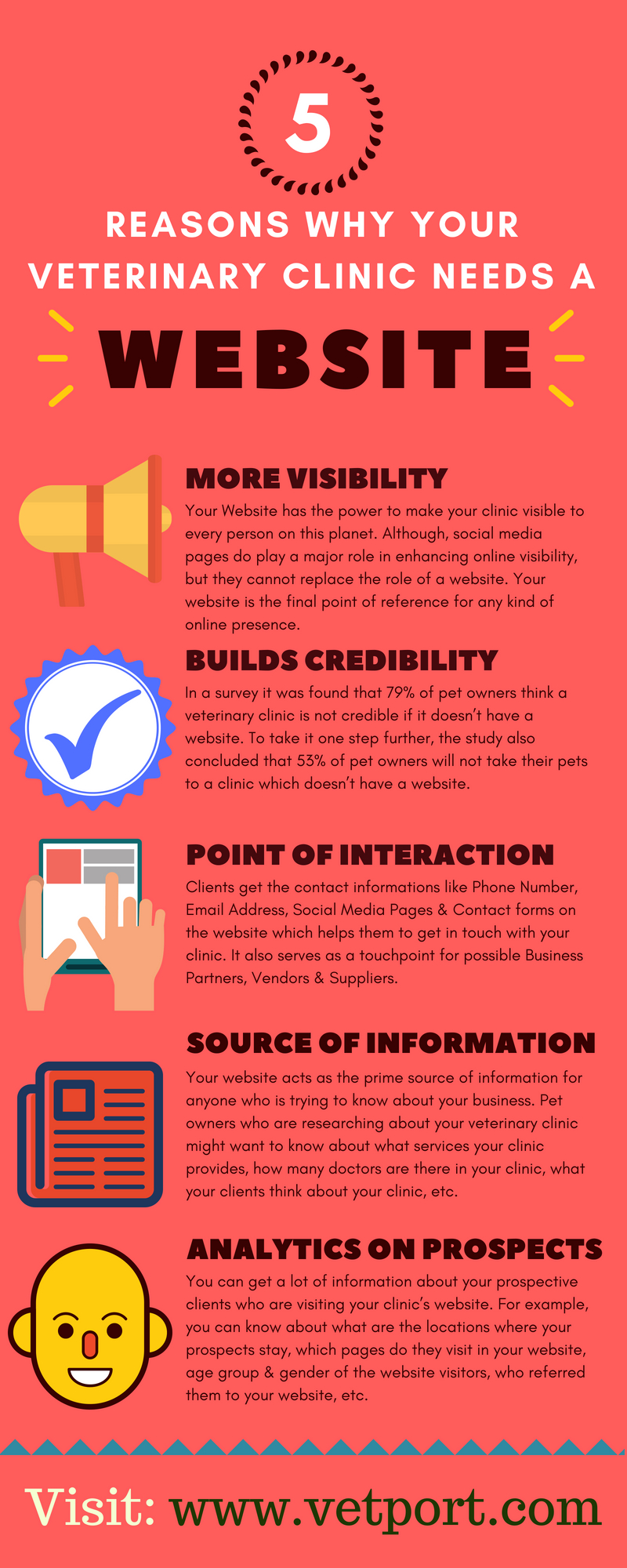
Benefits of Having a Website for Your Veterinary Practice
A veterinary practice website earns its keep by doing four things: helping new clients find you in local search, answering the questions that would otherwise become phone calls, letting people book without ringing reception, and proving you are worth trusting before the first visit. Everything else on it is optional.
Most people meet your practice long before they walk through the door. They search for a vet near them, open two or three sites, and decide who to call based on what they find. If your practice has no website, or one that has not been touched in five years, that decision gets made without you.
This is what a veterinary practice website is actually for, what it costs to build one, and what to get right when you do.
What a veterinary website has to do
A practice site does not need to be elaborate. It needs to do four jobs properly.
1. Be found. Most searches that matter to a clinic are local: "vet near me", "emergency vet", "equine vet" plus a town name. Being findable means having your practice name, address and phone number written the same way everywhere, a Google Business Profile that matches your site, and a page for each service and location you want to be found for. If you run more than one site, each one needs its own page rather than a shared paragraph.
2. Answer the basics without a phone call. Opening hours, including holidays. Where to park. What happens out of hours and who to call in an emergency. Which species and specialties you handle. Whether you take new clients. Payment options. Every one of these questions arrives at reception by phone dozens of times a week, and every one of them can be answered by a page that never takes a break.
3. Let people act. A phone number is the minimum. Online appointment booking, a request form, and a way to ask for a repeat prescription turn a visitor into a client while they are still interested. Clients who book at nine in the evening are not going to ring you the next morning; they will book with whoever let them do it there and then.
4. Earn trust before the first visit. Photographs of the actual team and the actual building. Names, qualifications and a sentence about each vet and nurse. Real reviews. A clear, plain explanation of how you handle anxious animals or difficult conversations. This is the part most practice sites skip, and it is the part that decides between two clinics with the same opening hours.
What it costs to build one
Ballpark figures, because the range is wide and depends heavily on who does the work:
A template site you set up yourself on a hosted website builder is the cheapest route: a small monthly fee, plus your own time. It is a reasonable starting point for a single-site practice that mainly needs to be found and contacted. The limits show up when you want online booking tied to your practice software.
A freelancer or small studio building on an existing theme sits in the low thousands for a first build, depending on how many pages and how much copy and photography is involved.
A custom agency build with original design, professional photography, written content and integrations runs considerably higher, and is worth it mainly for multi-site groups, referral practices and anyone whose website is a real acquisition channel rather than a business card.
Whichever route you take, budget for the running costs as well: the domain name, hosting, an SSL certificate, and someone whose job it is to keep the content current. A site that says you are closed on a Saturday you now open on is worse than no site at all.
What to get right when you design it
Build it for a phone first. The majority of local searches happen on a mobile. If your hours, address and call button are not obvious on a small screen without pinching, nothing else on the site matters.
Make it fast. Large uncompressed photographs are the usual culprit. People abandon slow pages, and search engines notice that they do.
One obvious action per page. Decide what you want a visitor to do on each page, and make that the most visible thing on it. A page that offers six equally weighted options gets none of them chosen.
Make it usable for everyone. Readable type, real contrast, alt text on images, and forms that can be completed with a keyboard. Some of your clients are elderly, some are visually impaired, and all of them are sometimes in a hurry in bad light.
Write the pages people actually search for. A single "Services" page listing thirty procedures ranks for nothing. Separate pages on the things clients search by name, dentistry, vaccinations, senior wellness, orthopaedic referral, will each earn their own traffic.
Keep it truthful and current. Out-of-date pricing, a vet who left two years ago, and a phone number that rings out do more damage than an empty page.
Connect the website to the software you already run
The difference between a brochure and a working website is whether it talks to your practice management system. When the two are connected, a booking made on the site lands in the diary without anyone retyping it, reminders go out on schedule, clients can see their own pet's records and invoices, and forms arrive already attached to the right patient.
VETport handles the practice side of that: online appointment booking, reminder management, a client portal and SOAP-based medical records, so the website becomes the front door to the system rather than a separate thing to maintain.
The short version
A veterinary website does not have to be beautiful to be valuable. It has to be findable, fast on a phone, honest about the practical details, and connected to the system that runs your diary. Get those four right and the rest is decoration.
See the five reasons in our infographic, or read more on marketing a veterinary practice and improving client communication.

